

This blog focuses on my scholarship in my five research projects: learning assistance and equity programs, student peer study group programs, learning technologies, Universal Design for Learning, and history simulations. And occasional observations about life.
History of Learning Assistance in the Early to Mid 1880s
 As a historian, I have been interested in the history of learning assistance and developmental education. Listening to the rhetoric of today as some argue for the elimination of developmental-level courses, a listener might think that such courses are a recent creation. A careful review of the historical record reveals they have been embedded as part of American higher education since the start. Below is the first of three parts of an examination of the 1800s. These are excerpts from my 2010 book published by Jossey-Bass, "Access at the crossroads: Learning assistance in higher education."
 Academic preparation academies emerged during the mid-1800s. These new postsecondary education units provided education equivalent to public high schools, which were not common in most of the United States at the time. Colleges recognized that tutoring as it was being practiced was insufficient to serve the needs of the expanding college student population. Often academies operated in the local community rather than on the college campus. In addition to tutoring, the academies enrolled students in remedial classes in reading, writing, and mathematics. This phase was a short one, as the expansion of public education across the United States replaced the need for many of the new academies. The composition of the student body changed little during this phase. Most students were white males from privileged families. Because most students were involved with learning assistance and from the upper class, little stigma was attached, as it was perceived as a natural part of the education process, a process that was available to so few at the time.
Impact of Jacksonian Democracy
Some historians identified several elements of Jacksonian democracy as affecting U.S. society in the mid-1800s. Whites benefited from the extension of voting privileges, middle-class workers and small shop owners received financial support, and education was extended to more of the population. One application of Jacksonian democracy was expansion of postsecondary education through common schools, public education, and an expanded curriculum for more people in the middle class rather than only the most privileged.
 During this time, expansion of postsecondary education was essential to support development of the economic middle class of merchants, tradesman, engineers, agriculturalists, and scientists needed to meet the needs of the growing nation and to support its economic development. This intersection of interests among political progressives and economic forces indirectly supported learning assistance as a means to ensure higher productivity of colleges to graduate sufficient numbers of skilled workers and leaders.
With poor or nonexistent secondary education and even inadequate primary education in some cases, however, many college aspirants could barely read and write (Craig, 1997). The number of those who tutored and the number who received tutorial assistance were nearly identical to the number of teaching faculty and their enrolled students (Brier, 1984), documenting the extensive involvement of learning assistance in postsecondary education. Since the early years, debate has continued about how to meet the needs of admitted college students. Providing tutoring for students was insufficient to meet their needs during this time. More services would emerge.
One option for meeting students’ academic preparation needs was to provide remedial and developmental courses in the institution’s curriculum. Proponents of elitism in postsecondary education prevailed temporarily against that option, however. The fixed college curriculum prescribed the same slate of classical courses for all students, without regard to individual needs for development of improved learning strategies and mastery of fundamental academic content material in mathematics and writing. Thus, academic preparatory academies continued to house remedial and developmental courses.
Counseling Makes a Difference for Low-Income Students Attending College
 From Inside HigherEd by Scott Jaschik. "A theme of several studies in the last year has been that there are plenty of academically talented low-income students who for some combination of reasons are not applying to competitive colleges to which they would probably be admitted. A new study along those lines -- this time documenting the impact of intense college counseling -- was released Monday by the National Bureau of Economic Research. The study (abstract available here) found that a nonprofit group that focuses on college counseling in Minneapolis-St. Paul had a significant impact in increasing the rate at which low-income students enrolled in four-year colleges, including competitive institutions.
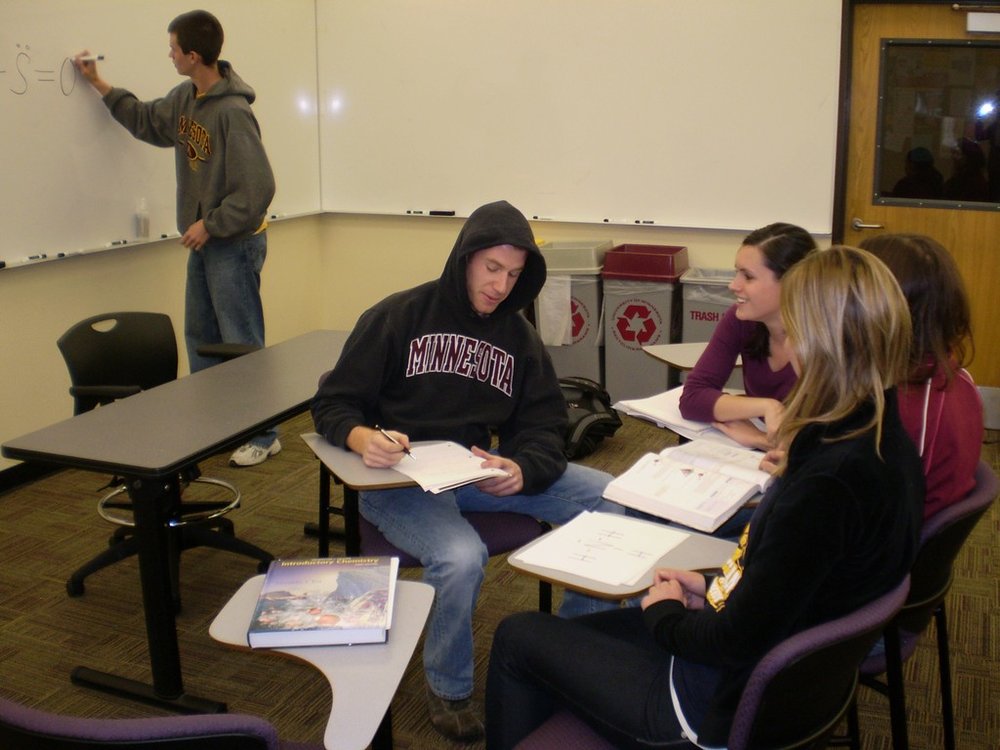 The study was conducted by Christopher Avery of Harvard University -- co-author (with Caroline Hoxby of Stanford University) of a study released in December that found that most highly talented, low-income students never apply to a single competitive college. That work has set off widespread discussions about what sort of interventions might make a difference. Avery's new study looks at College Possible, a program that provides in-depth college counseling as well as tutoring on the ACT or SAT. Avery was able to study the impact of the program by comparing results on College Possible participants with those who applied to (and were not admitted to) the program despite having slightly better academic preparation. The study found no statistically significant gains in ACT scores for those who participated in the program. Avery writes, however, that this may understate the impact of the program, because he suspects that some of those who didn't get into College Possible found test-prep services elsewhere. But the study found a significant impact on College Possible participants in applying to and enrolling in four-year colleges, and especially to competitive colleges. More than 45 percent of the students in the College Possible program enrolled at a four-year college, while the figure in the control group was 34 percent. And the most popular college among those in the program was Augsburg College, a competitive liberal arts college that did not enroll a single student from the control group (though some would appear to have been academically qualified had they applied). The findings could be significant in that the earlier Avery-Hoxby study noted that low-income students who enroll in more competitive colleges are more likely to land at institutions with better graduation rates, more financial aid, and more resources to promote their academic success.
San Jose State Efforts for First-Generation College Students
 The Chronicle of Higher Education reports on efforts at San Jose State University to better serve first-generation college students. <Read the entire report on the Chronicle of HE web site.> One of the items that I noticed was the concern about programming and support services for first-genration students AFTER the first year. So often many colleges provide programs to transition students into college and additional programming during the first year. They the institution turns to the next cohort of students and focuses on them. The second, third, and fourth year students are assumed "safe" and little attention is paid with them. The Noel-Levitz enrollment management organization documents how one of the biggest drop out groups in colleges are the invisible "middle" students. These are the struments that survived the first year and then go off the radar of intrusive and comprehensive student retention services. These students silently exit the institution for the same reasons that had such a difficult time during the first year, but no one pays any attention to them anymore. If they are surveyed why they left, they provide the politically correct answer it was financial. The school officials shrug their shoulders and say it was the poor economy that did it to the students. Actually, the departure of the students is far more complex and often preventable.
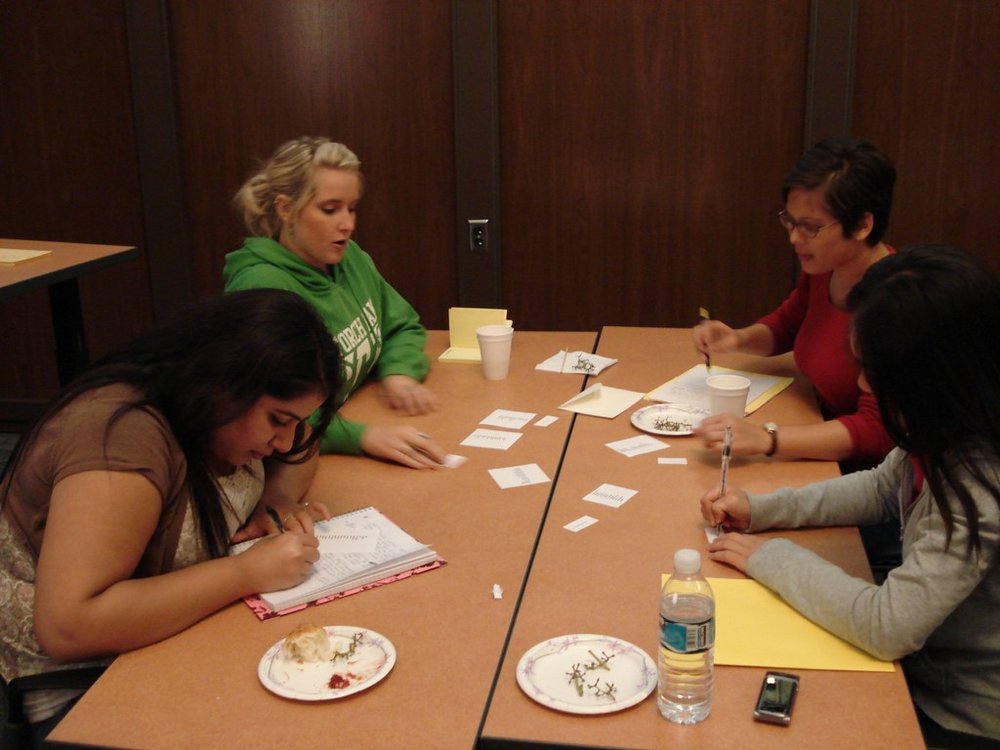 From the Chronicle of HE report: "....Among the programs Ms. Morazes has set up is a series of workshops for first-generation students. The sessions focus on such topics as goal-setting, stress-management strategies, and talking to family members about college. She also visits local high schools to publicize resources at San Jose State and to provide students with role models, something she hopes to do more of.
Also looking to expand the program is Art King, the university's associate vice president for student affairs. "Right now we only look at first-generation students when they come in, but they are first-generation students throughout their time at college," he says. "My hope is to have programs for second-year students, third-year students, and for fourth-year students, so each group gets appropriate resources and help."
Because the program is new and growing, there is not much long-range data on its effectiveness. Ms. Morazes is tracking the progress of participating students, including retention rates after the first year and progress toward declaring a major and earning a degree. She conducts evaluations before and after events to assess changes in students' knowledge of campus resources, their sense of belonging and connectedness, and whether they feel they are on track to earn a degree...."
Highlights from College Completion Annual Conference: Game Changers
 The College Completion Annual Conference was this week. <Read the entire report on the Chonicle of Higher Education webpage.> Much of Monday's discussion centered on what Complete College America calls the "game changers"—strategies that it says can double the number of remedial students passing college-level courses, triple the graduation rates for students transferring with associate degrees to four-year colleges, and quadruple completion of career certificate programs. Those include tying state appropriations to student performance; making introductory college-level courses, rather than remedial courses, the default placement for almost all students; and offering co-requisite remediation, which is offered alongside college-level courses, to those who need it.
Speakers also argued that too many students are placed directly in remedial courses on the basis of a single placement test, dooming many to a semester or more of courses they pay for but don't get credit for. Mathematics educators described accelerated math pathways, like Statway and Quantway, that they say are more relevant to most students than the traditional sequences that trip up many learners The approach, which was developed with the University of Texas at Austin's Charles A. Dana Center, is being used this fall across all of Texas' 50 community-college districts.
The group also heard from students. Kierra Brocks said that when she enrolled at Ivy Tech Community College, in Indiana, she missed the cutoff in math by two points and ended up in a remedial class that didn't challenge her. "It wasn't only money wasted but time wasted," she said. "It doesn't give you motivation to continue."
Top Rated New Activities TRIO Leaders Want for Their Programs
 In spring 2012 MAEOPP surveyed its members regarding what education practices they wanted for their programs. The information is categorized by highest priority and also by category. This information might be helpful for MAEOPP members as they consider education practices to submit from their own programs.
Practices requested by more than half of the survey responders:
- Financial literacy curriculum and activities
- Strategies for raising retention rates of students within the program
- Leadership development
- Study skills building workshops or courses
- Methods of assessing students for academic advisement
- Improved attitudes towards learning
- Improved student confidence
- Effective methods for tracking students after program completion
- Career exploration activities and classes
- Holistic assessments of students (example uses could be for program admission, academic advisement, or other program purposes)
- Job shadowing activities
- Career interest assessments and activities
[Click on this link to download the two-page survey results.]
New Report from ACT and COE, Condition of College Readiness 2013: First-Generation College Students
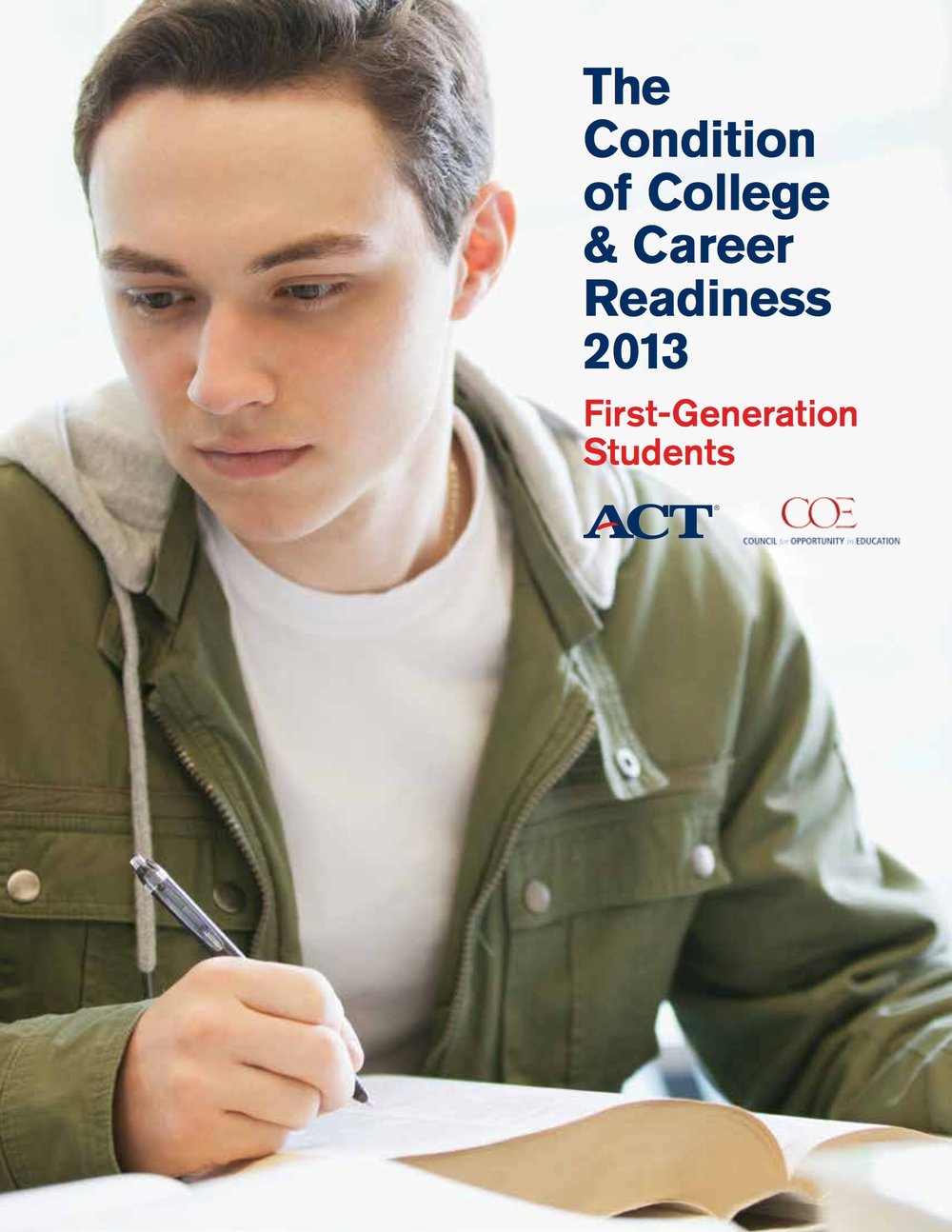
"This report on first-generation students is significant because it acknowledges the necessity of developing policies to promote college readiness with the needs of this population in mind." <Click here to download this report from ACT and COE.>
"Not surprisingly, first-generation students lag behind their peers in meeting college readiness benchmarks in core subject areas. The lack of families’ college background makes it all the more vital that schools with large percentages of first-generation students integrate supportive services into the required curriculum to create a college-going culture. Also, they must implement these services and strategies on a school-wide basis to ensure that all students are embarked on a path to college. Further, we recommend that schools partner with local colleges to offer dual enrollment in areas of greater propensity and interest for first-generation students. Dual-enrollment programs capitalize on students’ strengths and demonstrate to them that they are capable of doing college-level work.
The findings of this joint ACT/COE report underscore the importance of greater support for college access programs like TRIO and GEAR UP. For decades, these programs have provided academic tutoring, mentoring, counseling, and other supportive services to low-income and first-generation students to make the dream of college a reality. Recent federal initiatives have emphasized early childhood education; the nation must capitalize on that investment by continuing to support these students once they enter elementary and secondary school." Maureen Hoyler, President, Council for Opportunity in Education